
Membership
IMPORTANT UPDATE
ASSC is transitioning to a new membership platform, Conference Manager, effective immediately. The current platform will be deactivated on January 1, 2026.
Additionally, we are moving to a fixed yearly membership term, which will now run from September 1 to August 31 each year.
As a result of these changes, ALL New Members and those members who need to re-establish their membership record must create an account on the new platform prior to Dec 31, 2025.
Membership Options & Rates

Student Member
US$49 / one year
Available to students currently enrolled in a degree in an accredited program. The applicant’s research interests, and major project should match with the general research areas promoted by the ASSC. In addition to the usual member benefits, student members are eligible for various ASSC programs and scholarships, including student activities at annual meetings.

Regular Member
US$99 / one year
(without voting privileges) Available to applicants with a degree from an accredited University and an interest in the promotion or pursuit of the scientific study of consciousness as defined by the ASSC.
Full Voting Member
US$99 / one year or
US$750 for a lifetime membership
Available to applicants with a graduate degree in a relevant discipline and at least two articles published in internationally recognized peer-reviewed journals or the equivalent in scholarly output particular to the applicant’s discipline. These articles should relate to the scientific, clinical, or philosophical study of consciousness. In addition, members meeting these criteria will be entitled to vote on official ASSC matters such as Board elections.
Signup Process
1.
Create a User account with Conference Manager membership platform. CLICK HERE
2.
Select the relevant membership option
3.
Complete and Submit Application
Your membership application will be reviewed by the membership committee to determine the appropriate membership category based on your information provided.
4.
Complete your Payment
5.
Wait for Approval
You’ll be notified by Conference Manager once the review process is complete.
Special Considerations
In extreme circumstances, individuals who do not fulfil the above criteria may apply for special consideration. This application must be supported by two Full-Voting members, in the form of an email.
“We welcome volunteers who wish to contribute to the organizational and technical functioning of the Society.”
Member Benefits

ASSC Conference
ASSC Members benefit from a discounted registration for the ASSC annual conference.

Submit Publications
Discounted article processing charges for the official ASSC journal, Neuroscience of Consciousness.

Newsletter Subscription
Members will receive our monthly e-newsletter and other important ASSC announcements.
Additional Benefits
Discounted Readings
Consciousness and Cognition
Discount on the journal Consciousness and Cognition (currently $167 instead of $246 for individual purchases, €149 for our European members).

Oxford University Press
25% discount on all Oxford University Press book publications.
The Quest for Consciousness
25% discount on Christof Koch’s book “The Quest for Consciousness”, Roberts & Company Publishers.

MIT Press book publications
25% discount on all MIT Press book publications.
Advances in Consciousness Research
30% discount on the book “Advances in Consciousness Research”.
The Boundaries of Consciousness: Neurobiology and Neuropathology
25% discount on S. Laureys (Editor) “The Boundaries of Consciousness: Neurobiology and Neuropathology”, paperback version, Elsevier.
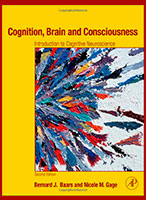
Cognition, Brain, and Consciousness: Introduction to Cognitive Neuroscience
25% discount on B. Baars and N. Gage (Editors) “Cognition, Brain, and Consciousness: Introduction to Cognitive Neuroscience”, Elsevier.
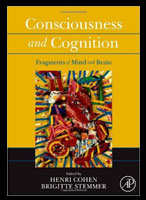
Consciousness and Cognition: Fragments of Mind and Brain
25% discount on H. Cohen and B. Stemmer (Editors) “Consciousness and Cognition: Fragments of Mind and Brain”, Elsevier
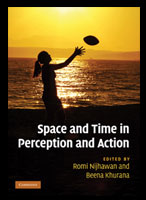
Space and Time in Perception and Action
20% discount on by R. Nijhawan and B. Khurana (Editors) “Space and Time in Perception and Action”, from Cambridge University Press.