
The ASSC William James Prize
for Contributions to the Study of Consciousness
Competition Overview
The William James Prize is awarded every year for published work constituting an outstanding contribution to the study of consciousness.
The paper should be authored by a graduate student or postdoctoral scholar/researcher who obtained a PhD or other advanced degree within seven years of the submission deadline (i.e – Graduated between 2019 – 2026).
New information for the Prize
Starting in 2025, the Prize will no longer alternate between theoretical and empirical contributions. Instead, all publications—whether empirical or theoretical—will be evaluated together, with the award determined solely on the basis of scientific merit and the degree of contribution to the field of consciousness research. To ensure a thorough evaluation process, the review committee will be expanded to include researchers with diverse areas of expertise.
To encourage equal opportunity, the eligibility deadline for being nominated for the Prize has been increased to 7 years post PhD. That duration may be increased to take into account parental leave or any other leave of absence post-PhD. For female applicants, an 18-months extension for each child born before or after the PhD award will be considered.
Key Dates
Submission Deadline: Jan 2, 2026
2025 Winner’s Spotlight

Abhilash Dwarakanath
22nd Edition - Winner 2025
The twenty-second William James Prize for Contributions to the Study of Consciousness was awarded to Abhilash Dwarakanath in 2025. Abhilash’s article “Bistability of prefrontal states gates access to consciousness” was published in Neuron in 2023 (https://doi.org/10.1016/j.neuron.2023.02.027). The paper proposes a novel and impactful framework for understanding the dynamics of consciousness.
The Prize

Cash award
An award of $1500 (USD) will be given to the winner of the competition.

Plenary address
An invitation to present a plenary address at the ASSC conference. (registration, travel and accomodation paid by ASSC).

Lifetime membership
A lifetime membership in ASSC will be awarded to winner of the competition.
Requirements
- Nominations, including self nominations, should be submitted via our online application form.
- The nomination statement should include a brief description as to why the contribution is outstanding, and for co-authored publications, there should be a statement describing the nominee’s role.
- Information regarding a request for an extension of the deadline for maternity leave or any other leave should be filled in the form.
- To be considered, the contribution must be published or accepted for publication and be written in English.
- Electronic copies in PDF format of the contribution and the nominee’s CV (optional) should be attached to the nomination letter.
The Prize Committee

Axel Cleeremans
Université Libre de Bruxelles

Ryota Kanai
Affiliation
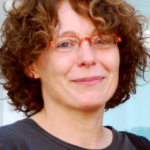
Elisabeth Pacherie
Institut Jean Nicod at École Normale Supérieure, Paris

Joseph LeDoux
New York University

Claire Sergent
Université Paris Descartes

Biyu He
New York University
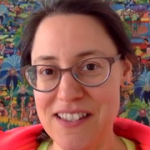
Susanna Siegel
Harvard University
Past Winners
21st Edition - Winner 2024
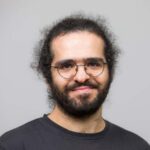
Shervin Safavi
The twenty-first William James Prize for Contributions to the Study of Consciousness was awarded to Shervin Safavi in 2024. Shervin’s article “Multistability, perceptual value, and internal foraging” was published in Neuron in 2022 (https://doi.org/10.1016/j.neuron.2022.07.024). The paper proposes a novel computational approach to understand perceptual multistability.
20th Edition - Winner 2023
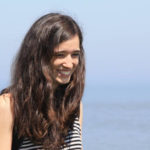
Elisabeth Parés Pujolràs
The twentieth William James Prize for Contributions to the Study of Consciousness was awarded to Elisabeth Parés Pujolràs in 2023. Elisabeth’s article “Latent awareness: Early conscious access to motor preparation processes is linked to the readiness potential” was published in Neuroimage, in 2019 (https://doi.org/10.1016/j.neuroimage.2019.116140). The paper proposes a novel method to investigate neural correlates of conscious intention.
19th Edition - Winner 2022

Ishan Singhal
The nineteenth William James Prize for Contributions to the Study of Consciousness was awarded to Ishan Singhal in 2022. Ishan’s article “Time and time again: a multi-scale hierarchical framework for time-consciousness and timing of cognition” was published in Neuroscience of Consciousness in 2021 (https://doi.org/10.1093/nc/niab020). The paper proposes a new hierarchical model of time-consciousness that provides a theoretical framework for the phenomenology of temporal experience.
18th Edition - Winner 2021

Anat Arzi
The eighteenth William James Prize for Contributions to the Study of Consciousness was awarded to Anat Arzi in 2021. Anat’s article “Olfactory sniffing signals consciousness in unresponsive patients with brain injuries” published in Nature in 2020 (https://doi.org/10.1038/s41586-020-2245-5) was selected as the winning nomination. The paper shows that sniff responses can be used to diagnose the state of consciousness of patients with brain injuries and also robustly predict their future recovery.
17th Edition - Winner 2020

Jake Quilty-Dunn
The seventeenth William James Prize for Contributions to the Study of Consciousness was awarded to Jake Quilty-Dunn in 2020. Jake’s article “Is Iconic Memory Iconic?” published in Philosophy and Phenomenological Research in 2019 (https://doi.org/10.1111/phpr.12625) was selected as the winning nomination. The paper investigates the distinction between iconic memory and visual working memory. It argues that differences in representational formats for these two forms of memory has consequences for theories of consciousness and the distinction between perception and cognition.
16th Edition - Winner 2019

Vincent Taschereau-Dumouchel
The sixteenth William James Prize for Contributions to the Study of Consciousness was awarded to Vincent Taschereau-Dumouchel in 2019. Vincent’s article “Towards an unconscious neural reinforcement intervention for common fears” published in PNAS in 2018 (https://www.pnas.org/content/115/13/3470) was selected as the winning nomination. The study investigates reprogramming of naturally occurring fear responses outside of conscious awareness using fMRI decoding, allowing to bypass the subjective unpleasantness in conscious exposure to fear stimuli.
15th Edition - Winner 2018

Jennifer Windt
The fithteenth William James Prize for Contributions to the Study of Consciousness was awarded to Jennifer Windt in 2018. Jennifer’s book “Dreaming: A conceptual framework for philosophy of mind and empirical research” (MIT Press, 2015) was selected as the winning nomination. The book outlines a comprehensive proposal for a conceptual framework for describing conscious experience in dreams, integrating philosophy of mind, sleep and dream research, and interdisciplinary consciousness studies.
14th Edition - Winner 2017
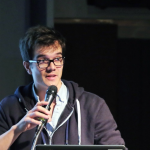
Jean-Rémi King
The fourteenth William James Prize for Contributions to the Study of Consciousness was awarded to Jean-Rémi King in Beijing, China, on the occasion of the 21st Annual Meeting of the Association of the Scientific Study of Consciousness. Jean-Rémi’s paper “Brain mechanisms underlying the brief maintenance of seen and unseen sensory information” (Neuron 92.5 (2016): 1122-1134) was selected as the winning nomination. The study identifies the neural architecture supporting the encoding and the maintenance of subliminal images in the human brain, by using decoding and temporal generalization analyses of magneto-encephalography recordings. This study suggests that the content of conscious perception corresponds to the representational contents encoded in the deepest processing stages of perceptual processing.
13th Edition - Winner 2016
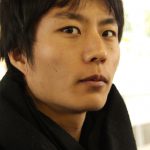
Satohiro Tajima
The thirteenth William James Prize for Contributions to the Study of Consciousness was awarded to Satohiro Tajima in Buenos Aires, Argentina, on the occasion of the 20th Annual Meeting of the Association of the Scientific Study of Consciousness. Satohiro’s paper “Untangling brain-wide dynamics in consciousness by cross-embedding” (PLOS Computational Biology, 11(11), e1004537, 2015) was selected as the winning nomination. The paper developed a powerful equation-free analysis (“cross-embedding”) to link the causal interactions and topological complexities in brain-wide activities, based on generic mathematical theorems in dynamical systems. This finding on dynamical integration of brain-wide information bridges and updates the previous neural theories of consciousness from a viewpoint of dynamics and topology.
12th Edition - Winner 2015

Alexandra Vlassova
The prize was awarded to Alexandra Vlassova in Paris, France, on the occasion of the 19th Annual Meeting of the ASSC. Alexandra’s paper “Unconscious information changes decision accuracy but not confidence”. The paper uses a novel behavioural task and computational modeling to investigate the controversial idea that unconscious information can influence our decisions. The paper demonstrates that unconscious information can be accumulated in a similar manner but less effectively than conscious information, and that this information is used to boost or diminish decision accuracy
11th Edition - Winner 2014
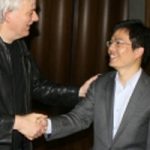
Zhicheng Lin
The prize was awarded to Zhicheng Lin in Brisbane, Australia, on the occasion of the 18th Annual Meeting of the ASSC. Zhicheng’s paper “Priming of awareness or how not to measure visual awareness” was selected as the winning nomination. The paper describes a phenomenon called priming of awareness: visual awareness for low-visibility trials is elevated when these trials are mixed with high-visibility trials relative to when presented alone.
10th Edition - Winner 2013
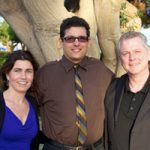
Aaron Schurger
The was awarded to Aaron Schurger in San Diego, California, on the occasion of the 17th Annual Meeting of the ASSC. Aaron’s paper “An accumulator model for spontaneous neural activity prior to self-initiated movement” was selected as the winning nomination. The paper offers a novel account of the cortical “readiness potential” in terms of ongoing spontaneous fluctuations in neural activity, a neural accumulator, and a threshold. Schurger’s account departs dramatically from the prevailing assumptions about the nature of the readiness potential and its relation to the conscious experience of “intending” to move.
9th Edition - Winner 2012

Stephen Fleming
The was awarded to Stephen Fleming in Brighton, UK, on the occasion of the 16th Annual Meeting of the ASSC. Stephen’s paper “Relating Introspective Accuracy to Individual Differences in Brain Structure” was selected as the winning nomination. The paper is one of the first investigations into the neural basis of introspective accuracy – the ability to reflect on one’s own performance. A key advance was the use of a psychometric method that equalized perceptual task performance across individuals, enabling isolation of variability in subjective confidence.